Why Terrace Flooring Fails: Causes, Cracks, Water Seepage & Permanent Repair Solutions
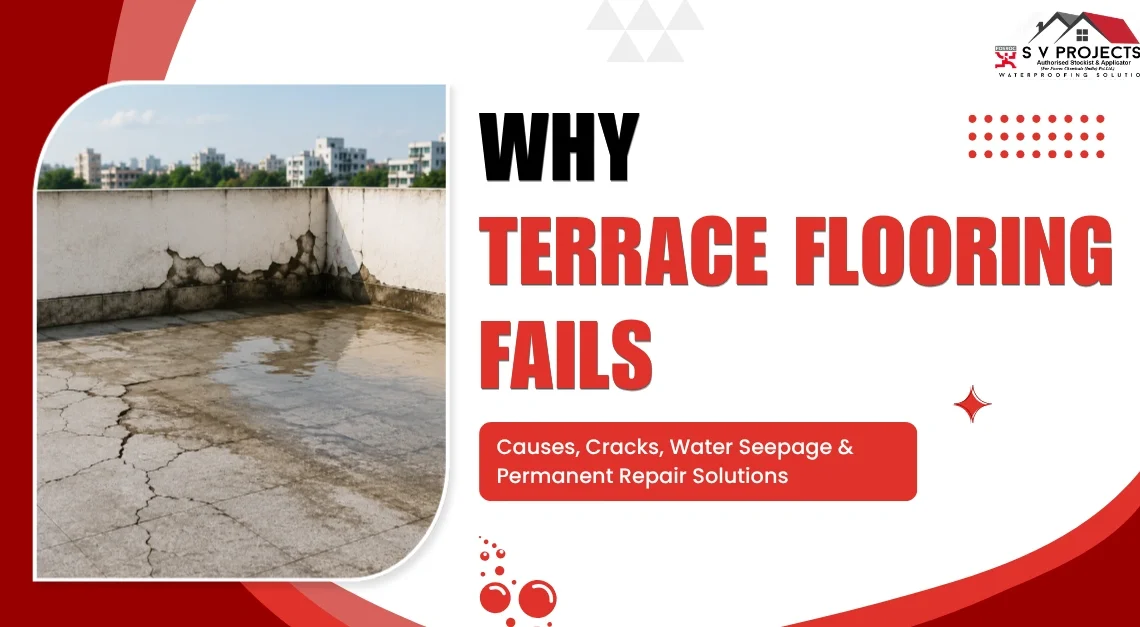
Most homeowners ignore it at first. Honestly, many people think it’s “normal aging.” But terrace flooring failure is rarely a small issue.
A damaged terrace can slowly weaken the slab, affect the steel inside concrete, and create expensive structural problems later. I’ve seen houses where people spent lakhs fixing interiors while the actual problem was sitting right above their heads for years.
The sad part? Many terrace problems happen because of poor workmanship during construction itself. Bad concrete mix. No bonding layer. Weak screed. Wrong slope. No control joints.
And once water starts entering, things go downhill pretty fast. This guide explains the real reasons terrace floors fail, how engineers identify the damage, and what permanent repair methods actually work.
Why Terrace Floors Start Failing After a Few Years
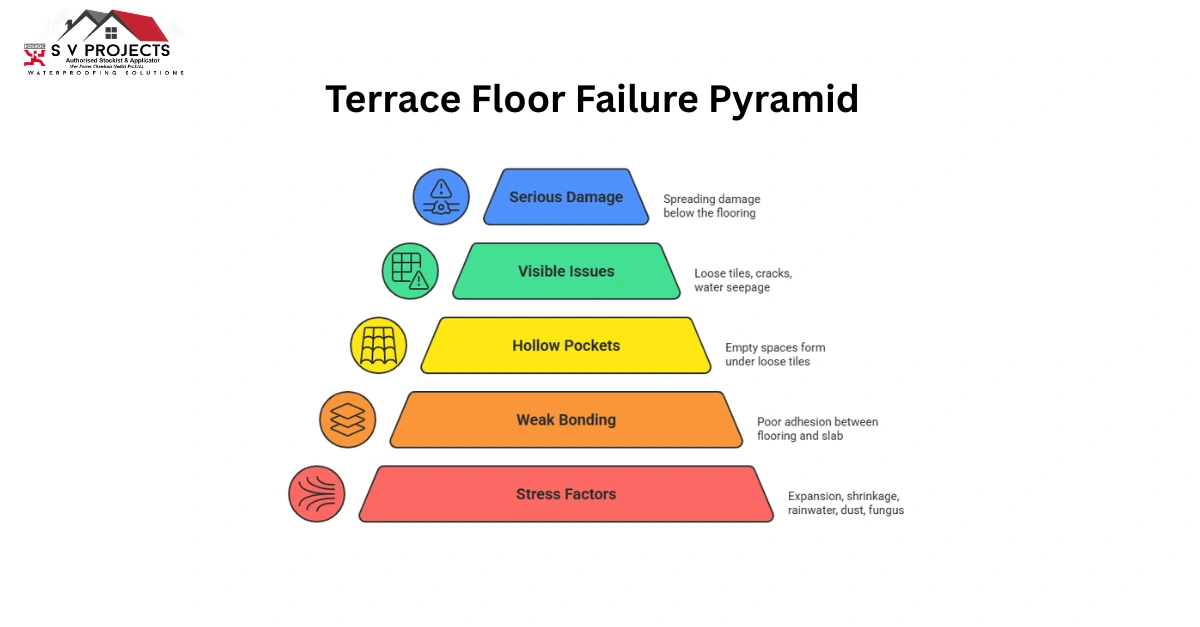
A terrace handles a lot more stress than people think. Every single day, the slab expands in heat and shrinks again at night. Rainwater sits on the surface. Dust and fungus slowly build up. Tiny cracks grow wider year after year.
If the original work was weak, the flooring begins separating from the slab underneath. That’s where most problems begin. The biggest issue behind many terrace failures is poor bonding between layers. Once the top layer loses grip, hollow pockets form inside. You may hear empty sounds while walking.
You may also notice:
- Loose tiles
- Surface cracks
- Water seepage
- Damp ceiling patches
- Bubbling paint
- White salt deposits
- Broken grout lines
People often search for terrace floor repair only after leakage becomes serious. By then, the damage below the flooring is already spreading.
Terrace Floor De-Bonding Problems
De-bonding simply means the flooring layer separates from the concrete slab below. This is extremely common in older terraces and badly repaired roofs.
What Causes De-Bonding?
Several things can trigger it:
- Poor surface cleaning before flooring
- Weak cement mortar
- No bonding chemical
- Water entering through cracks
- Thermal movement from heat
- Fungus or algae growth under tiles
- Improper curing
Sometimes contractors place new flooring directly over dusty or weak surfaces. That’s a huge mistake. Concrete surfaces must be roughened and cleaned properly before applying fresh screed or tiles. If not, the new layer won’t grip properly.
After some time, the flooring starts lifting slowly. You may not notice it immediately. But the bond is already gone underneath.
Hollow Sound in Terrace Flooring
This is one of the easiest warning signs. Tap the floor gently using a metal rod or even a coin. A solid floor gives a hard, dense sound. A damaged area gives a hollow sound.
That empty sound usually means air gaps formed because the screed separated from the slab. And honestly, once hollow pockets spread widely, patch repairs rarely last long.
Common Causes of Terrace Cracks
Terrace cracks don’t happen randomly. There’s always a reason behind them. Some cracks are small and harmless. Others allow water directly into the slab.
Thermal Expansion Damage in Terrace Slabs
Terraces face extreme temperature changes. During hot afternoons, the slab expands. At night, it cools and shrinks. This movement happens daily. If the terrace has no control joints, stress builds up inside the surface. Eventually cracks appear.
You’ll often notice long straight cracks across open terrace areas. Dark-colored tiles make this worse because they absorb more heat.
Weak Concrete Screed Problems
Many contractors use poor-quality screed mixtures to save money. Instead of proper engineered concrete, they prepare weak cement-sand mixes on-site without correct ratios. Over time the screed becomes brittle.
Then:
- Cracks develop
- Surface powdering starts
- Water enters easily
- Tiles loosen
Weak screed is one of the biggest reasons homeowners need major terrace floor repair later.
Poor Concrete Mix Design
Concrete isn’t just cement and sand mixed randomly.
The strength depends on:
- Water-cement ratio
- Aggregate quality
- Mixing consistency
- Fiber additives
- Compaction
- Curing time
Bad mix design creates porous concrete. Porous concrete absorbs water like a sponge. And once moisture enters repeatedly, damage spreads deep into the slab.
Water Seepage and Leakage Issues
This is usually the point where homeowners panic.
You suddenly notice:
- Water dripping from ceiling
- Damp walls
- Mold smell
- Paint bubbles
- Wet electrical points
And during heavy rain, the leakage becomes worse.
How Water Travels Inside Concrete
Many people think water only enters through visible cracks. Not true.
Water can pass through:
- Hairline cracks
- Tile joints
- Weak grout
- Porous screed
- Construction joints
- Broken waterproof layers
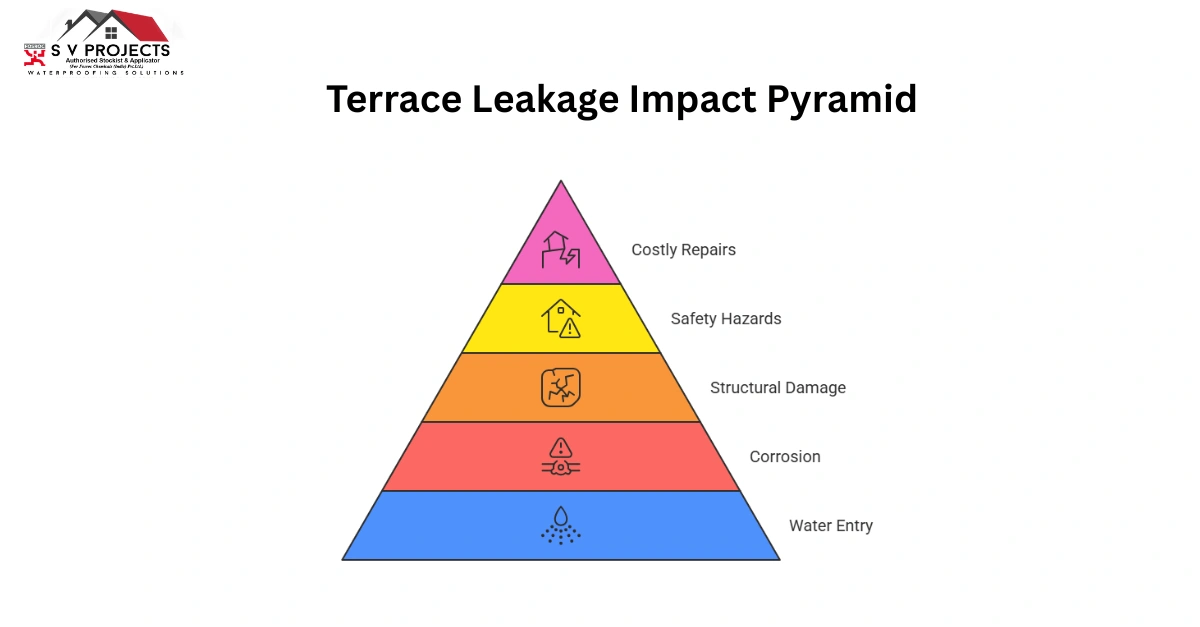
Concrete may look solid from outside, but internally it contains tiny capillaries. Water slowly moves through these microscopic paths. Once steel reinforcement starts getting wet repeatedly, corrosion begins. That’s where serious structural danger starts.
Risks of Ignoring Terrace Leakage
Ignoring leakage for years can cause:
- Reinforcement steel rusting
- Concrete spalling
- Ceiling weakening
- Tile collapse
- Electrical hazards
- Mold growth
- Structural instability
I once visited a house where the owner ignored terrace leakage for almost six years because “it only leaks during heavy rain.” The slab later needed major structural repair. The repair cost became nearly four times higher than early waterproofing work would’ve cost.
Reinforcement Steel Corrosion and Long-Term Structural Damage
This part scares engineers the most. Inside every RCC slab, steel bars carry the structural load. When water reaches the steel, rust begins forming. Rust occupies more volume than original steel. That expansion creates internal pressure inside concrete. Slowly, concrete starts cracking and breaking away.
You may notice:
- Rust-colored stains
- Falling concrete pieces
- Exposed steel bars
- Ceiling cracks
At this stage, the problem is no longer cosmetic. It becomes structural. And sadly, many people attempt cheap surface fixes instead of proper engineering repairs.That usually wastes money.
Fungus and Algae Impact on Bonding
This issue is surprisingly common in humid areas. Terraces that remain wet for long periods develop algae, fungus, and moss growth. At first it just looks dirty. But underneath, these biological layers trap moisture continuously. They also weaken adhesion between old and new repair materials.
Why Cleaning Matters Before Repairs
Many failed repairs happen because contractors apply waterproof coatings directly over contaminated surfaces. That repair won’t last.
Proper preparation requires:
- Pressure washing
- Fungus removal chemicals
- Mechanical grinding
- Crack cleaning
- Dust removal
Without this step, even expensive waterproofing systems can fail early.
Importance of Surface Preparation Before Repair Work
Honestly, this is where good contractors and careless contractors become very different. Most terrace failures after repair happen because the surface wasn’t prepared properly.
Good Surface Preparation Includes
- Removing loose flooring completely
- Chipping weak screed
- Cleaning dust thoroughly
- Repairing cracks properly
- Roughening smooth concrete
- Applying bonding agents
- Checking slope direction
Skipping even one step can reduce repair life badly and some workers try shortcut methods to finish faster. But terrace repairs aren’t forgiving and water always finds weak points eventually.
Why SBR Bonding Agents Matter So Much
SBR stands for Styrene Butadiene Rubber. Sounds technical, but the idea is simple and it helps old concrete and new concrete bond strongly together.Without a bonding layer, fresh screed may separate again after some time.
Benefits of SBR Bonding Agent
A good SBR layer helps:
- Improve adhesion
- Reduce shrinkage cracks
- Increase water resistance
- Improve flexibility
- Strengthen repair layers
Engineers often mix SBR with cement slurry before applying new screed. It creates a much stronger connection between surfaces. For durable terrace floor repair, bonding quality matters almost as much as waterproofing itself.
Why Engineers Prefer M20 Fiber-Reinforced Concrete Screed
Traditional terrace screeds crack easily. That’s why many engineers now prefer fiber-reinforced concrete.
What Makes M20 Screed Better?
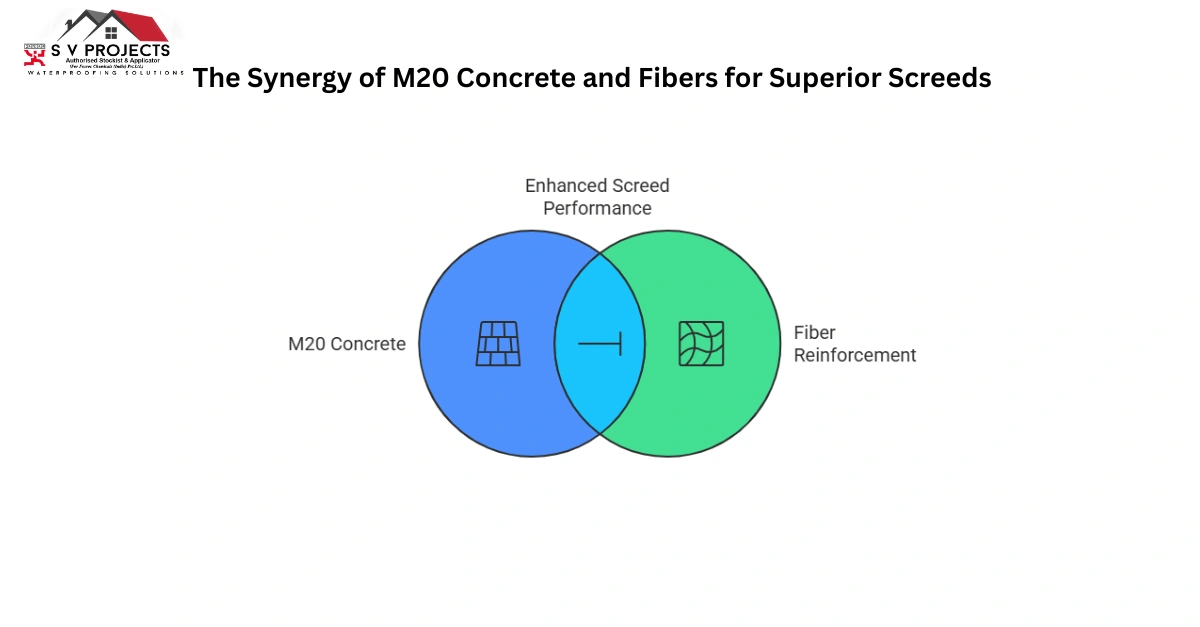
M20 grade concrete offers better compressive strength compared to weak mortar mixes.
When fibers are added:
- Crack resistance improves
- Shrinkage reduces
- Surface strength increases
- Durability improves
The fibers act like tiny reinforcement elements spread throughout the mix. In terrace floor repair, this helps control microcracks before they turn into major leakage paths and structural problems.
Proper Thickness Matters Too
A very thin screed layer often fails quickly. A properly designed screed usually includes:
- Correct slope
- Adequate thickness
- Compaction
- Curing
- Waterproof admixtures
All these small things together decide long-term performance.
Importance of Control Joints in Terrace Flooring
This is something many local contractors completely ignore. Control joints help absorb movement caused by temperature changes. Without joints, stress gets released through random cracking.
Where Control Joints Are Needed
Engineers usually provide joints:
- At regular spacing
- Around parapet walls
- Near columns
- At large open terrace areas
Flexible sealants are used inside these joints to allow movement safely. Skipping control joints may save money initially. But later the terrace pays the price.
How Engineers Repair Damaged Terrace Floors
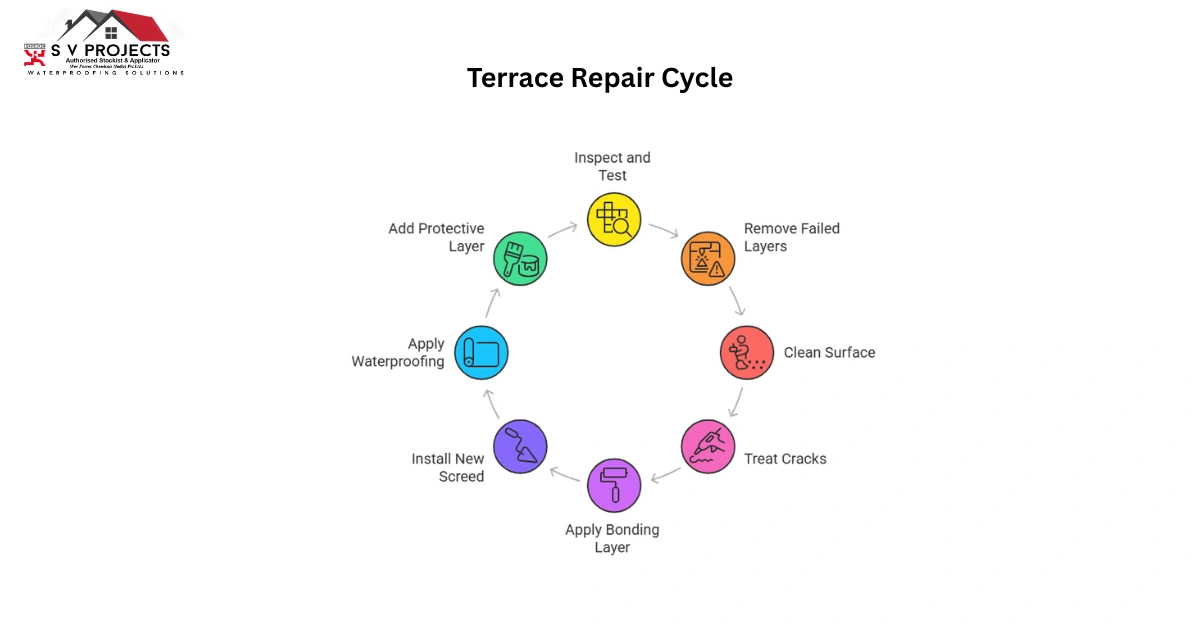
Professional repair work is much more detailed than simply adding waterproof paint. A proper repair process usually follows several steps.
Step-by-Step Terrace Repair Process
- Inspection and Sound Testing
Engineers identify hollow areas, cracks, leakage paths, and weak zones.
- Removal of Failed Layers
- Loose tiles and damaged screed are removed completely.
- Partial removal often leaves hidden weak areas behind.
- Surface Cleaning
The slab is cleaned using grinders, wire brushes, or pressure washing.
- Crack Treatment
Cracks are opened, cleaned, and filled with suitable repair materials.
- Bonding Layer Application
SBR bonding slurry is applied before fresh screed.
- New Screed Installation
M20 fiber-reinforced screed is laid with proper slope.
- Waterproofing System
Depending on condition, engineers may use:
- Cementitious waterproofing
- Polyurethane coatings
- APP membrane systems
- Acrylic waterproof coatings
- Final Protective Layer
- Tiles or protective coatings are added above the waterproof layer.
- This entire process takes time.
- But rushed terrace repairs usually fail early.
Best Terrace Waterproofing Repair Methods
There’s no single waterproofing method suitable for every terrace.
The right choice depends on:
- Existing damage
- Terrace size
- Climate
- Budget
- Structural condition
Cementitious Waterproofing
- Common for residential terraces.
- Easy to apply and economical.
- Works well when surface preparation is done correctly.
Polyurethane Waterproofing
- Very flexible and durable.
- Handles thermal movement better.
- Usually more expensive though.
APP Membrane Waterproofing
- Torch-applied membrane systems provide strong waterproof barriers.
- Often used in large commercial buildings.
Acrylic Waterproof Coatings
- Useful for maintenance and reflective cooling benefits.
- But they need periodic recoating.
- A proper engineer inspection helps decide the best system.
- Not every terrace needs the same solution.
Common Contractor Mistakes During Terrace Repair
Honestly, I’ve seen some terrible repair jobs. And sadly, homeowners usually realize the mistakes only after the next rainy season.
Frequent Mistakes
Applying waterproof coating over loose surfaces
- Ignoring hollow flooring areas
- No slope correction
- Using weak mortar
- No control joints
- Improper curing
- Using cheap chemicals
- Leaving old cracked screed underneath
- Skipping bonding agents
Some contractors promise “instant waterproofing” in one day. Be careful with those claims. Quality terrace floor repair and waterproofing need proper surface preparation, curing time, and the right repair process to ensure long-lasting protection.
Tips to Increase Terrace Floor Life
A terrace needs maintenance just like any other part of the house. Ignoring small issues makes future repairs expensive.
Simple Maintenance Tips
- Clean terrace drains regularly
- Remove stagnant water quickly
- Repair cracks early
- Avoid heavy impact loads
- Check tile joints yearly
- Remove algae buildup
- Recoat waterproof layers when needed
- Inspect after monsoon season
Small care can easily add many years to terrace life. Honestly, prevention is much cheaper than full replacement work.
Proper Terrace Maintenance Methods Homeowners Ignore
Most people clean their terrace only before festivals or family functions. That’s it. But moisture problems build slowly.
Things Worth Checking Every Few Months
- Walk around after rain.
- Notice if water remains in one area for hours.
- Tap suspicious spots for hollow sounds.
- Check ceiling corners below the terrace.
Look for:
- Dampness
- Paint peeling
- Musty smell
- New cracks
SV Projects Waterproofing Experts
SV Projects Waterproofing Specialists was incorporated in the month of May 2015 by Mr. Kallu Sarva Reddy. It is located at Nagole, Hyderabad. SV Projects have more than 16 years of experience in offering their services of waterproofing and maintenance. SV Projects team consists of over 100 laborers, 10 supervisors, and two civil engineers who monitor every step of the process to guarantee the success of the project.
Moreover, SV Projects has been granted distributorship rights for renowned brands like Dr. Fixit, Fosroc, MCrete, and MYK Schomburg. They offer their waterproofing services throughout Hyderabad for standalone homes, flats, commercial properties, industries, and corporate offices. All projects come with a warranty of 3 years.
Final Thoughts on Terrace Flooring Failure
Good repair work isn’t just about stopping water. It’s about rebuilding the terrace properly so the problem doesn’t return every monsoon. And honestly, choosing experienced engineers matters more than choosing flashy waterproof products.
A strong surface, proper bonding, good screed, control joints, and correct waterproofing together create a terrace that actually lasts. If your terrace already has hollow flooring, leakage, or cracks, don’t keep postponing it. These problems almost never fix themselves.
For reliable and long-lasting waterproofing services in Hyderabad, contact SV Projects Waterproofing Experts on WhatsApp: +91 9949954566
